

By Ainul Habeeba

“Who are you?”
In the labyrinth of existence, we all grapple with one fundamental question that echoes through the chambers of our minds: ‘Who are you?’ is a query that transcends time and space, penetrating the very essence of our being. A question that delves deep into the core of identity and self-awareness.
At first glance, the answer to this seemingly simple question may appear obvious. One might respond with a name, nationality, or occupation; a slew of labels we wear like clothing. However, none of these answers appear to be correct.
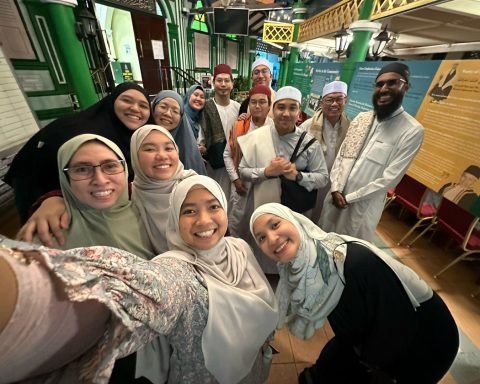
When Ustaz asked, “Who are you?”, I was taken aback, not expecting such an introspective question. People responded with the following: “I am a Muslim”, “I am a slave of Allah ﷻ ”, and “I am a creation of Allah ﷻ ”. All of these answers were correct, but none of them felt right.
Eventually, Ustaz revealed the answer.
WE ARE NEEDY REFUGEES OF ALLAH ﷻ. WE ARE ALL DEPENDENT ON ALLAH ﷻ. WE ARE CONSTANTLY IN NEED OF ALLAH ﷻ AND ALL THE GOODNESS HE PROVIDES US WITH.
If we look closely, He truly has given us everything. Allah ﷻ bestows the gift of life on us from the very beginning of our conception. He meticulously crafted each individual human being and created a unique tapestry of traits, skills, and potential within them. The Divine Artist choreographed the harmonious operation of the human body, a miraculous creation in and of itself. We can appreciate the splendour of nature and the comforting touch of others thanks to our senses, which serve as our windows to the outside world.
He blesses us every day. When we set alarms to help wake us up the following day, we believe that it is the alarm that wakes us up, but it is actually Allah ﷻ who wakes us up and gives us another chance at life.
HE GIVES US EVERYTHING. HE IS GIVING US EVERYTHING AND WILL CONTINUE TO GIVE US EVERYTHING. FROM THE PAST TO THE PRESENT AND TO THE FUTURE.
But what do we give Him in return? How do we thank our Lord, who has given us everything and then some more? How do we make Him a part of our daily lives?
Allah ﷻ is truly kind. He sent Prophet Muhammad ﷺ as a guide and role model to all of us. By emulating him ﷺ , we can find ways to integrate Him ﷻ into our busy and hectic lives.
Dhikr (Remembrance):
In the hustle and bustle of daily life, it is easy to become distracted and disconnected from our spiritual essence. Engaging in dhikr helps us remain present and mindful of the presence of Allah ﷻ in every moment. By centering our hearts and minds on His remembrance, we become less entangled in worldly distractions and more focused on our ultimate purpose.
Dhikr acts as a spiritual cleanser, purifying our hearts from negative emotions and sins. Through consistent remembrance and seeking Allah’s ﷻ forgiveness, we cleanse our souls of impurities and cultivate a sense of spiritual purity. This process of self-purification allows us to develop greater sincerity in our worship and draw nearer to Allah’s ﷻ mercy.
Incorporating dhikr into our daily lives does not have to be difficult; it can be a simple yet powerful practice. Some practical ways to integrate dhikr into our lives are:
Morning and Evening Adhkar: Start and end your day with morning and evening remembrances.
Dhikr on the Go: Utilise idle moments during the day, such as commuting, waiting in line, or doing household chores, to engage in silent or whispered dhikr.
Solat and Tasbih: After completing the obligatory prayers (solat), engage in the recommended glorification (tasbih) and remembrances to enhance the spiritual impact of your prayers.
Prayer:
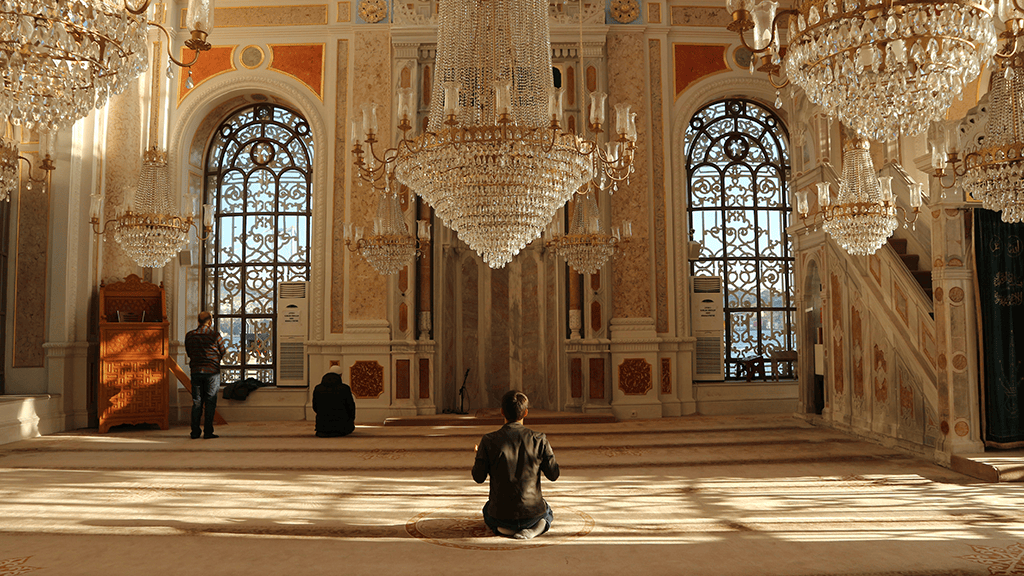
Allah ﷻ has created prayer as a way for us to remember Him at least five times a day. Prayer serves as a vehicle for establishing a profound spiritual connection with Allah ﷻ. Through solat, we communicate directly with the Creator, acknowledging His Oneness and seeking His Guidance and Mercy. The act of standing before Allah ﷻ in humility and devotion fosters a sense of love and reverence, drawing the believer closer to the Divine presence.
“The first thing which will be judged among a man’s deeds on the Day of Resurrection is the prayer. If this is in good order, then he will succeed and prosper, but if it is defective, then he will fail and will be a loser.”
At-Tirmidhi 413
Prayer also serves as a means of purifying the soul from sins and impurities. When we seek forgiveness and engage in self-reflection during solat, we are encouraged to repent for our mistakes and strive for spiritual growth. This process of purification reinforces the concept of accountability and encourages believers to live a righteous life. Thus, if possible, we should aim to include sunnah prayers in our schedule.
We have to be careful not to rush our prayers for anything or for any reason, as we are standing before Allah ﷻ, the One who is in charge of whatever it is that we are rushing for.
Istighfar:
In the journey of life, we humans are bound to make mistakes and encounter moments of weakness and wrongdoing. The recognition of our fallibility and the desire for spiritual growth leads us to seek forgiveness from a Higher Power. It is a time to reflect on our shortcomings and the areas in which we can improve. The purification process reinforces the concept of accountability and encourages believers to live a righteous life. As such, the act of istighfar carries immense importance in Islam and holds multifaceted significance for believers.
Despite being granted entry into jannah already, the Prophet Muhammad ﷺ still made abundant istighfar. He would constantly remind Muslims of its importance and make it a part of his daily routine, particularly after his prayers.
“Thauban (May Allah be pleased with him) said:
Whenever the Messenger of Allah ﷻ finished his solat (prayer), he would beg forgiveness three times [by saying, ‘Astaghfirullah’ (3 times)] and then he would say:
“Allahumma Antas-Salamu, wa minkas-Salamu, tabarakta ya Dhal-Jalali wal-Ikram. (O Allah! You are the Bestower of Security and Security comes from You; Blessed are You. O Possessor of Glory and Honour.”
Imam Al-Auza’i (one of the subnarrators) of this Hadith was asked, How should forgiveness should be sought?” He replied:
“I say: Astaghfirullah, Astaghfirullah (I seek forgiveness from Allah. I seek forgiveness from Allah).” ”
Muslim
Remembering Him ﷻ:
We may either make things simple or difficult for ourselves. Some of us prefer to try and emulate every single thing Prophet Muhammad ﷺ did, but Allah ﷻ has provided us with a simple way to remember and get close to Him. The first thing to understand is that remembering Allah ﷻ , the Most High, is all it takes to stay connected to Him. The most effective technique to establish a connection with Allah ﷻ is to think about Him. In the Quran, Allah ﷻ says:
ٱلَّذِينَ ءَامَنُوا۟ وَتَطْمَئِنُّ قُلُوبُهُم بِذِكْرِ ٱللَّهِ ۗ أَلَا بِذِكْرِ ٱللَّهِ تَطْمَئِنُّ ٱلْقُلُوبُ
“Those who believe and whose hearts find comfort in the remembrance of Allah. Surely in the remembrance of Allah do hearts find comfort.”
Quran 13:28
In Surah Ar-Ra’d, Allah ﷻ informs us about what a connection with Him actually is. So the highest level of connection is created by remembering Him a lot.
YES, DHIKR IS A WAY FOR US TO REMEMBER HIM. BUT DHIKR IS NOT THE ONLY WAY. WE CAN REMEMBER ALLAH ﷻ BY ACKNOWLEDGING THAT HE IS THE ONE WHO ALLOWS US TO DO ANYTHING AND EVERYTHING WE WANT TO DO.
Indeed, in the realisation of our dependence on Allah ﷻ for every aspect of our existence lies a profound humbling of the ego and a strengthening of our connection with the Divine. As we go about our daily lives, engaging in the simplest of actions such as eating and walking, it is crucial to remember that these abilities are not of our own making but rather gifts from Allah ﷻ, the Most Merciful.
Acknowledging that our ability to walk, move, and perform countless tasks is granted by Allah’s ﷻ Grace allows us to break free from the illusion of self-sufficiency. It dispels the notion that we are the sole architects of our lives and fosters a deep sense of humility. We come to realise that all our accomplishments, talents, and capabilities are bestowed upon us by the Divine, and we are merely vessels through which His Will is manifested.
In recognising Allah ﷻ as the Source of all our abilities, we become more attuned to the spiritual dimension of our existence. Our actions become imbued with intentionality––seeking His Pleasure and Guidance in every endeavour. The ego, which often takes credit for success and achievement, starts to dissolve, paving the way for a deeper connection with Allah ﷻ.
Consistency is Key:
In the vast tapestry of Islam, one thread that weaves itself through every aspect of this divine faith is consistency. As Muslims, we need to recognise that this cornerstone of devotion is not merely a mechanical routine or a rigid set of rituals but a profound journey of self-discovery and spiritual growth. It is an introspective expedition that beckons us to explore the depths of our hearts and souls, bridging the gap between our human frailties and our innate longing to connect with our Lord ﷻ.
But we do not need to excessively burden ourselves in our attempts to get closer to Allah ﷻ.
Narrated `Aisha:
Allah’s Messenger ﷺ said,
“Do good deeds properly, sincerely, and moderately, and know that your deeds will not make you enter Paradise, and that the most beloved deed to Allah is the most regular and constant, even if it were little.”
Sahih Al-Bukhari 6464
This introspective journey of consistency in Islam is not a linear path without obstacles. It is a meandering road, where some days we walk with steadfast determination, while on others, we stumble and falter. But it is in these moments of imperfection that we learn the most profound lessons. It is when we embrace our vulnerability and seek Allah’s ﷻ Mercy that we find the strength to rise once more, dust off our doubts, and continue forward on this path of growth and self-discovery.
Whenever we feel down, we can remind ourselves of this hadith:
Abu Huraira 
“I am near to the thought of My servant as he thinks about Me, and I am with him as he remembers Me. And if he remembers Me in his heart, I also remember him in My heart, and if he remembers Me in assembly I remember him in assembly, better than his (remembrance), and if he draws near Me by the span of a palm, I draw near him by the cubit, and if he draws near me by the cubit I draw near him by the space (covered by) two hands. And if he walks towards Me, I rush towards him.”
Sahih Muslim
Take comfort in this: The fact that you wish to be closer to Allah ﷻ indicates that He wants you to think of Him. He wants you to get closer to Him. He wants to hear your voice calling out to Him. And remember, He is closer to you than your jugular vein.
Do You Believe in One God
& Ready to [Re]start your Journey of Faith & Gratitude as a Muslim?


CONGRATULATIONS ON BECOMING A MUSLIM!
Drop us a message
we will guide you further on the next steps, InshaAllah!
ALL ARE WELCOME!
NON-MUSLIMS, NEW MUSLIMS, REDISCOVERING MUSLIMS, SEASONED MUSLIMS
Join us with your family & friends for our
Circles of Revision, Remembrance & Reflection
SEEKERS’ CIRCLE
IMAN & IHSAN : PERFECTING FAITH
- Every Tuesdays
- 730pm to 10pm
- Masjid Abdul Gafoor | 41 Dunlop St, Singapore 209369 | MPH Basement
NEW MUSLIMS’ CIRCLE
ISLAM & IMAN : FAITH & PRACTICE
- Every Fridays
- 730pm to 10pm
- Masjid Abdul Gafoor | 41 Dunlop St, Singapore 209369 | MPH Basement
QURAN CIRCLE
PEER LEARNING CIRCLE
- Every Saturdays
- 2pm to 4pm
- Masjid Wak Tanjong | 25 Paya Lebar Road, Singapore 409004 | Basement











Follow Us